
Purpose of a PDA and PDRA
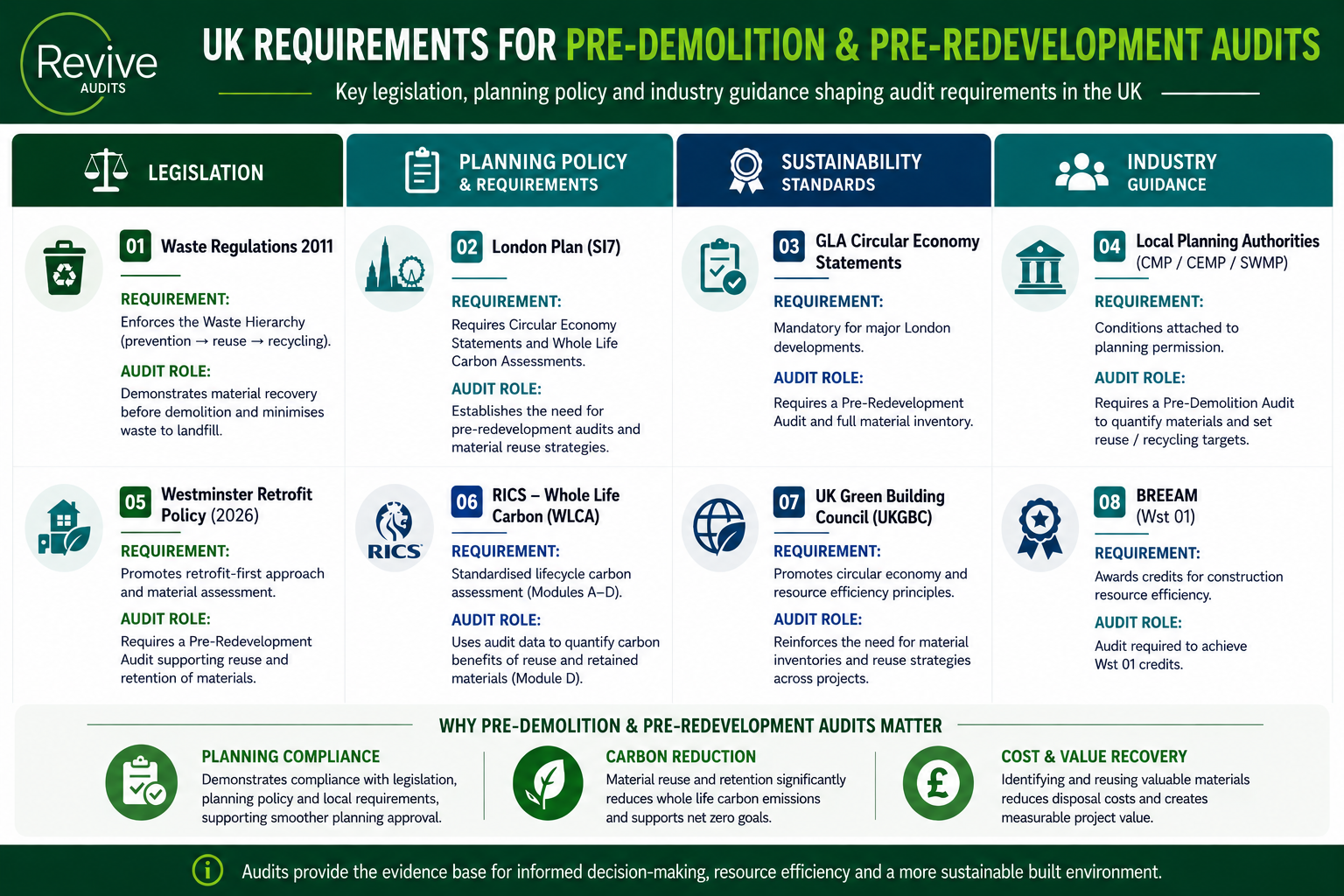
BREEAM Pre-demolition Audits are also known as Pre-Deconstruction Audits (PDAs) and Pre-Redevelopment/Refurbishment Audits (PDRAs).
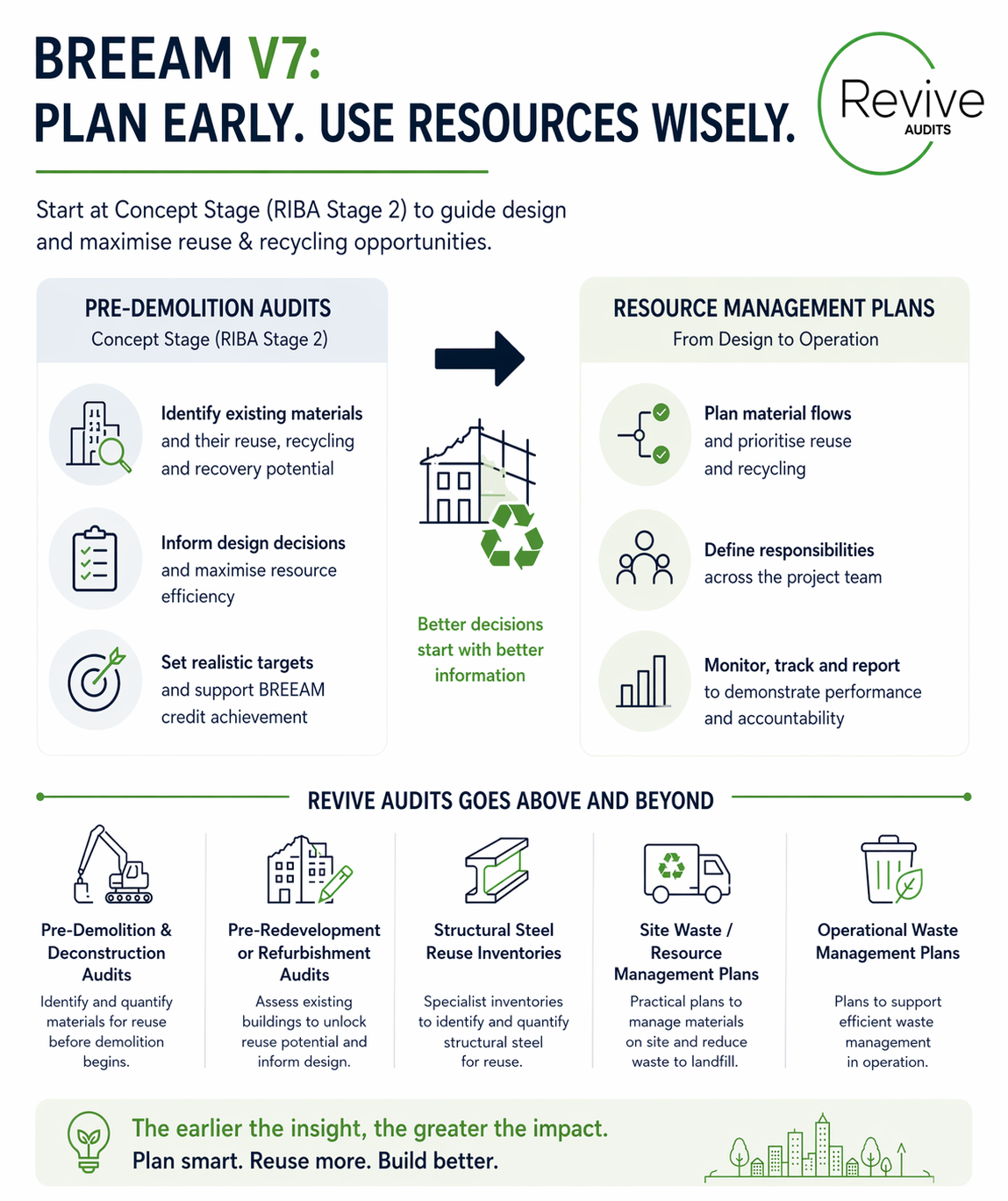
These Audits meet the requirements of the BREEAM New Construction Standard V7, BREEAM Refurbishment and Fit Out V7 and WST01 Construction Waste Management.
By using them, you can attain credits while promoting resource efficiency through the effective management and reduction of construction waste.
The overall aim of the PDA and PDRA is to demonstrate sustainable construction and redevelopment. Specifically, you can use your BREEAM assessment to achieve your required target rating, ranging from good to outstanding.
When these Audits are undertaken
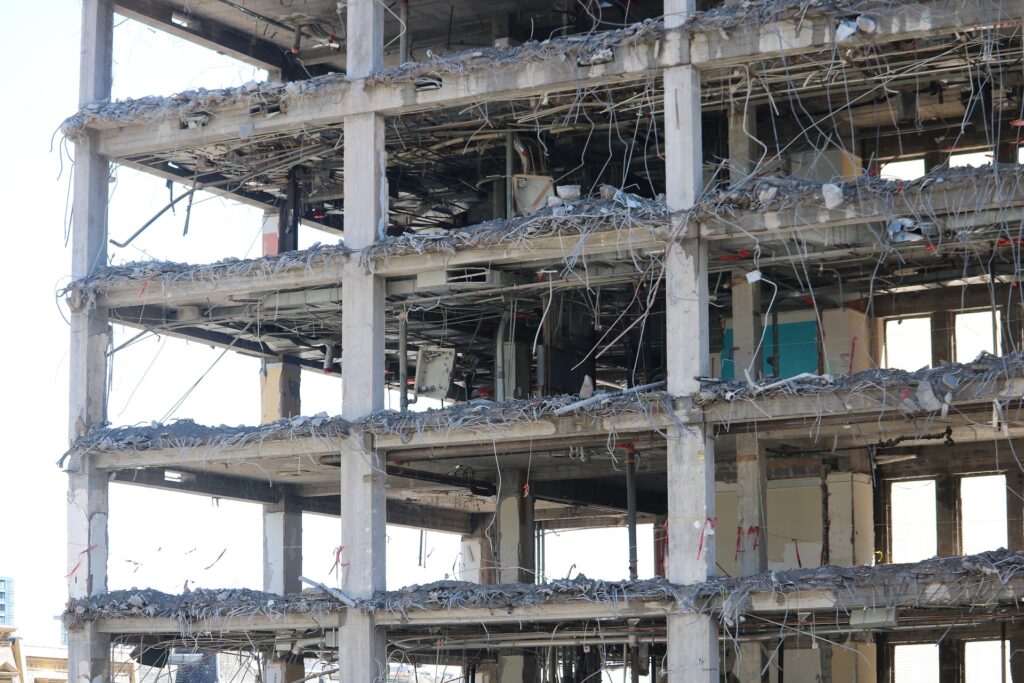
These audits are undertaken on existing buildings, structures and hard-standing surfaces prior to demolition or redevelopment/refurbishment during the early design / RIBA 2 stage.
Why they matter for the built environment
Ultimately, they are an important sustainability tool for understanding how existing Key Demolition Products (KDPs) can be incorporated into the site redevelopment.
By understanding what the building is made up of, estimations of weights and volumes are undertaken with the key goal of maximising recovery and diverting materials from landfill by following the order of the waste hierarchy:
By following these waste hierarchy principles, an assessment of materials will be undertaken to promote resource efficiency in the aim of reducing the environmental impact of the project and influencing the design. In addition, recommendations will be made to minimise construction waste by incorporating the reuse of materials and saving on overall project costs.
The Pre-Demolition and Pre-Redevelopment Audit Process
Prior to the audit, Revive Audits will analyse any information received relating to the project, which can include original architect drawings, structural plans or demolition /refurbishment drawings.
Following this, we will undertake a non-intrusive investigation of the internal and external areas of the site, using appropriate measuring tools.
This information is collated within Revives bespoke software, calculating estimated weights and volumes of Key Demolition Products (KDPs) which will include the building structure, roof and internal building fabric (excluding furniture) as well as external elements like hard-standing surfaces, fences and outbuildings.
Overall, Revive will provide recommendations and advice on the maximum potential reuse and open/closed loop recycling options to minimise construction waste. To achieve this, we work in accordance with the BRE Pre-Redevelopment Waste Audit Code of Practice.
Revive will incorporate the following steps within the PDA:
This will, in turn, support the Principal Contractor's Site Waste Management Plan (SWMP) or Resource Management Plan (RMP) in managing materials from the demolition or refurbishment process and ensuring recovery is in line with the waste hierarchy.
For Pre-Redevelopment Audits, these assessments are undertaken as per the proposed scope of redevelopment/refurbishment works as opposed to the demolition of the whole building.
For further information or to receive a quotation, contact Revive Audits to discuss your project.